Embarking on the journey of contractor selection opens up a world of possibilities and considerations. From evaluating potential contractors to negotiating contracts, each step plays a crucial role in the successful completion of your project. Let’s delve into the intricate process of selecting the right contractor for your needs.
As we navigate through the key factors and methods for finding contractors, we will uncover valuable insights to streamline your selection process and ensure the quality of work delivered.
Factors to Consider in Contractor Selection
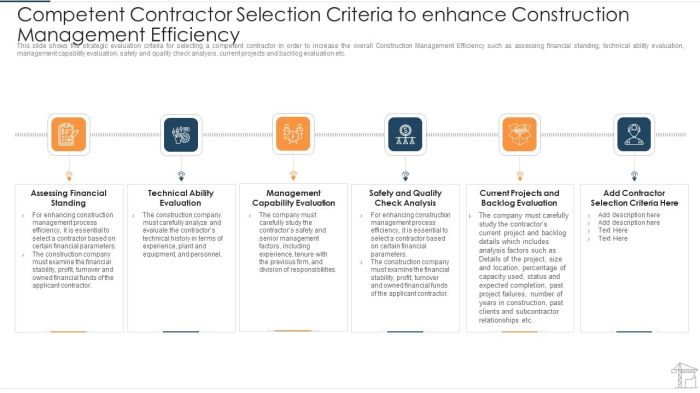
When it comes to selecting a contractor for your project, there are several important factors to consider to ensure a successful outcome. Evaluating potential contractors based on specific criteria can help you make an informed decision and hire the right professional for the job.
Experience and Reputation
Assessing a contractor’s experience and reputation is crucial in determining their suitability for your project. Look for contractors who have a proven track record of successfully completing similar projects in the past. Check online reviews, ask for recommendations from previous clients, and inquire about the contractor’s work history to gauge their expertise in the field.
Licenses and Insurance
Before hiring a contractor, it is essential to verify that they are properly licensed and insured. A valid license demonstrates that the contractor has met the necessary requirements to operate legally in their field. Additionally, adequate insurance coverage protects both you and the contractor in case of any accidents or damages during the project.
Past Work and References
To further assess a contractor’s capabilities, ask for examples of their past work and references from previous clients. Viewing the contractor’s portfolio of completed projects can give you insight into their craftsmanship and attention to detail. Contacting references allows you to hear firsthand about the client’s experience working with the contractor and the quality of the finished results.
Different Methods for Finding Contractors
Finding the right contractor for your project can be a crucial decision. Here are some different methods to consider when searching for potential contractors:
Referrals
Referrals are one of the most common ways to find trustworthy contractors. You can ask friends, family, or colleagues for recommendations based on their past experiences. This method can help you find contractors who have already proven their skills and reliability.
Online Platforms
Online platforms like Angie’s List, Houzz, or Thumbtack provide a convenient way to search for contractors in your area. You can read reviews, compare ratings, and view portfolios to help you make an informed decision. However, it’s essential to verify the information and credentials of the contractors before hiring them.
Local Directories
Local directories, such as the Yellow Pages or local Chamber of Commerce listings, can also be a useful resource for finding contractors in your area. These directories provide contact information and basic details about different contractors, allowing you to reach out to them directly.
Tips for Conducting Online Research
- Look for contractors with positive reviews and high ratings.
- Check for any complaints or negative feedback from previous clients.
- Verify the contractor’s license, insurance, and certifications.
- Request references and contact them to inquire about their experiences.
- Compare quotes from multiple contractors to ensure fair pricing and quality work.
Hiring through Agencies vs. Independent Contractors
Hiring through agencies
Advantages
Agencies often pre-screen contractors, provide insurance coverage, and offer guarantees for their work.
Disadvantages
Agencies may charge higher fees, limiting your choices, and may not always prioritize personalized service.
Hiring independent contractors
Advantages
More flexibility in choosing contractors, potentially lower costs, and direct communication with the contractor.
Disadvantages
Limited oversight, potential for unreliable contractors, and the responsibility of managing insurance and guarantees.
Attending Trade Shows or Events
Trade shows and events related to the construction industry can be a great way to connect with potential contractors in person. You can meet contractors, see their work samples, discuss your project requirements, and establish a rapport before making a decision.
Negotiating Contracts with Selected Contractors
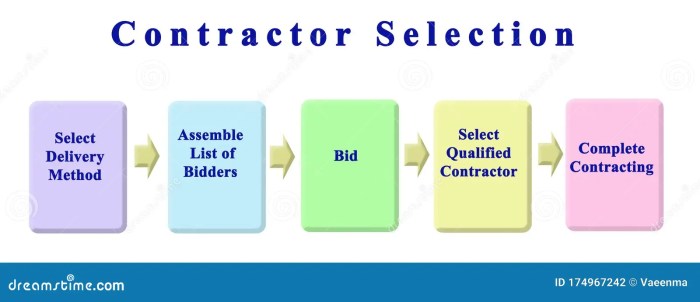
When negotiating contracts with selected contractors, it is crucial to establish clear and concise terms to ensure a successful working relationship. Here are some key elements to consider and tips for effective negotiation:
Key Elements in a Contract
- Scope of Work: Clearly Artikel the specific tasks, timelines, and deliverables expected from the contractor.
- Pricing and Payment Terms: Negotiate fair pricing based on the scope of work and establish a payment schedule that aligns with project milestones.
- Insurance and Liability: Specify insurance requirements and determine liability in case of accidents or damages during the project.
- Termination Clause: Include provisions for terminating the contract if either party fails to meet their obligations.
Negotiating Pricing and Payment Terms
- Research Market Rates: Understand industry standards and compare pricing from different contractors to negotiate a competitive rate.
- Discuss Payment Schedule: Establish clear payment terms, including initial deposits, progress payments, and final payments upon completion.
- Incentives for Early Completion: Consider offering incentives for early project completion to motivate the contractor to meet deadlines.
Importance of Detailed Scope of Work
Having a detailed scope of work in the contract is essential to avoid misunderstandings and scope creep. It helps both parties clearly understand what is expected, reducing the likelihood of disputes during the project.
Handling Disputes or Changes
- Open Communication: Encourage open communication between both parties to address any issues or changes promptly.
- Change Order Process: Establish a formal process for handling changes to the scope of work, including cost adjustments and timeline modifications.
- Mediation or Arbitration: Include provisions for mediation or arbitration in case disputes arise that cannot be resolved through direct negotiation.
Ensuring Compliance and Quality in Contractor Work
Ensuring that the contractor follows building codes and regulations is crucial to the success of any construction project. By implementing strategies for monitoring and evaluating the quality of work, you can maintain high standards throughout the project. Clear communication of expectations to the contractor is key to achieving the desired results and avoiding misunderstandings.
Additionally, addressing subcontracting or outsourcing issues promptly can help prevent delays and ensure accountability.
Ensuring Compliance with Building Codes and Regulations
One way to ensure compliance is to clearly Artikel all relevant building codes and regulations in the contract. Conduct regular inspections and request documentation to verify that the contractor is following these guidelines. Consider hiring a third-party inspector to provide an unbiased assessment of the work.
Monitoring and Evaluating Work Quality
- Establish clear quality standards and include them in the contract.
- Regularly inspect the work in progress and provide feedback to the contractor.
- Implement a review process to evaluate the quality of completed work stages.
- Seek feedback from other stakeholders, such as architects or engineers, to ensure quality standards are met.
Communicating Expectations
Clearly define project goals, timelines, and quality expectations in the contract. Hold regular meetings with the contractor to discuss progress and address any concerns. Provide written documentation of any changes or additional requirements to avoid misunderstandings.
Addressing Subcontracting or Outsourcing
Ensure that subcontractors or third parties hired by the contractor meet the same quality standards and compliance requirements Artikeld in the contract. Require the contractor to inform you of any subcontracting arrangements and obtain approval before work begins.
Last Recap
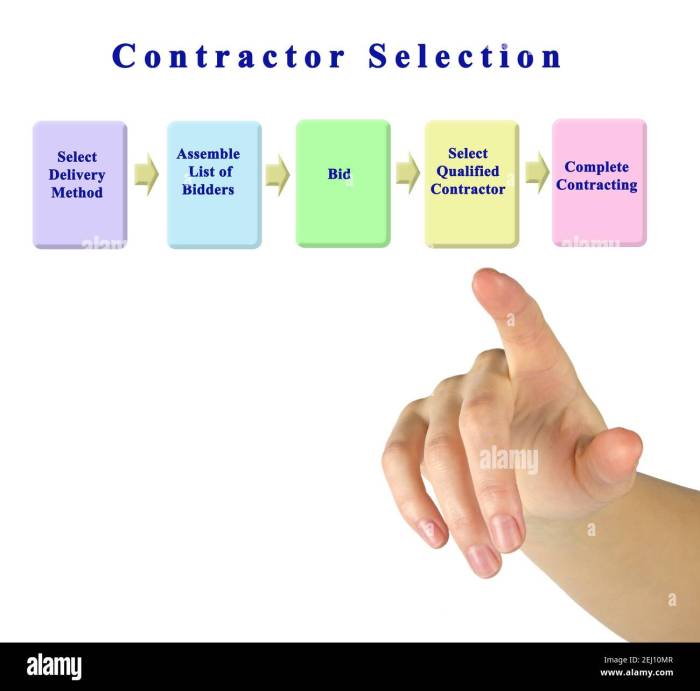
In conclusion, mastering the art of contractor selection is not just about finding someone to do the job—it’s about building a partnership based on trust and professionalism. By following the guidelines provided, you are equipped to make informed decisions and achieve successful outcomes in your projects.
Essential Questionnaire
How can I verify a contractor’s past work and references?
You can ask for a portfolio of their past projects and contact their references directly to inquire about their experience with the contractor.
What key elements should be included in a contract with a contractor?
Key elements include project scope, timeline, payment terms, warranties, and dispute resolution mechanisms.
How can I ensure compliance with building codes and regulations?
Ensure the contractor is familiar with local building codes, obtain necessary permits, and conduct periodic inspections during the project.
What are the advantages of hiring contractors through agencies versus independent contractors?
Hiring through agencies may offer more accountability and support, while independent contractors may provide more flexibility and cost savings.